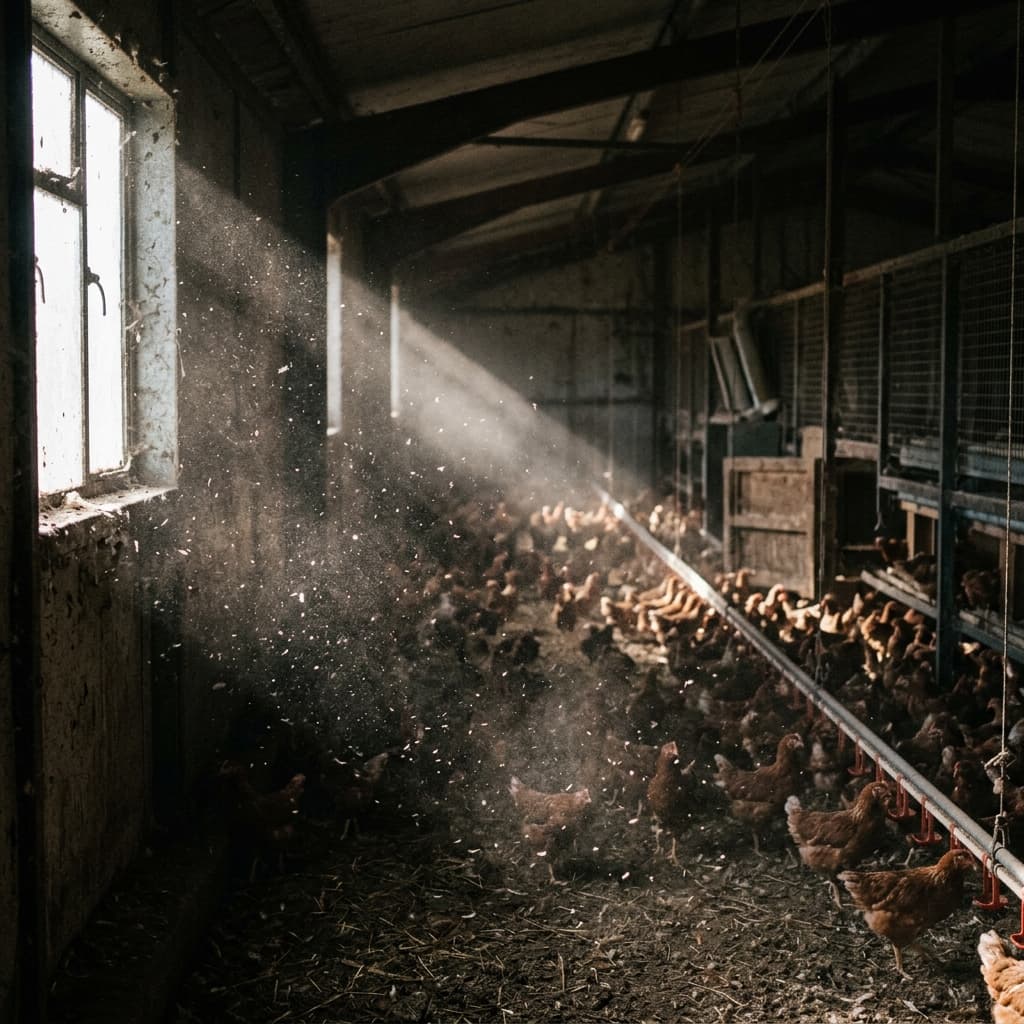
In poultry farming, the atmosphere is naturally loaded with airborne particles. Often considered a simple comfort issue for the farmer or an inevitable side effect of bird activity on the litter, dust represents a seriously underestimated biological threat. It is not inert; it serves as an ideal transport vector for pathogenic micro-organisms and ammonia, directly threatening the respiratory integrity of the flock and the sanitary balance of the building.
The biological composition of dust in farming
The dust found in a poultry house is a complex mixture of highly active organic matters:
- Feather debris and skin dander: rich in proteins that feed opportunistic bacteria.
- Dried fecal particles: sheltering enterobacteria such as Escherichia coli or Salmonella.
- Mold spores (Aspergillus): growing in hot, humid areas of the litter.
- Adsorbed ammonia: gaseous ammonia (NH3) physically binds to dust particles, turning them into concentrated chemical irritants.
How dust attacks the birds' respiratory system
Poultry have a unique respiratory system with air sacs that lack ciliated cells to expel foreign particles. When a bird inhales air laden with fine dust:
- Large particles irritate the trachea, causing inflammation and increasing mucus production.
- Submicron dust (the finest) penetrates directly into the deep air sacs, depositing bacteria and viruses on their surfaces.
- This continuous aggression saturates the local immune system, opening the door to secondary bacterial superinfections (respiratory colibacillosis).
Critical exposure periods
The health risk peaks during periods of high activity (feed distribution, bird movements), during hot weather (maximum ventilation resuspending dust), or when the litter is too dry and powdery.
The control protocol recommended by N2K Laboratoires
To break the recontamination cycle via the air and durably sanitise the birds' environment, surface hygiene must be coupled with atmospheric stabilisation:
Step 01 — Organic breakdown of surfaces with BIOACTIVE. During downtime, using BIOACTIVE liquefies proteins stuck to ventilation ducts, fans, and high structures where dust accumulates.
Step 02 — Atmospheric neutralisation and disinfection with OXYLIS HOCl. Applying OXYLIS HOCl in the presence of animals via ultra-fine misting (fogging) binds dust to the floor through micro-condensation while destroying airborne viruses and bacteria. The hypochlorous acid also neutralises the ammonia bound to the particles.
Key takeaway
Dust in farming is not an aesthetic issue but a permanent sanitary hazard. Knocking down dust while continuously disinfecting the air using hypochlorous acid misting is essential to protect animal respiratory health and optimise zootechnical performance.
Recurring contamination problems?
Request a complete audit of your facilities by our biosecurity experts.
Request a Field Audit