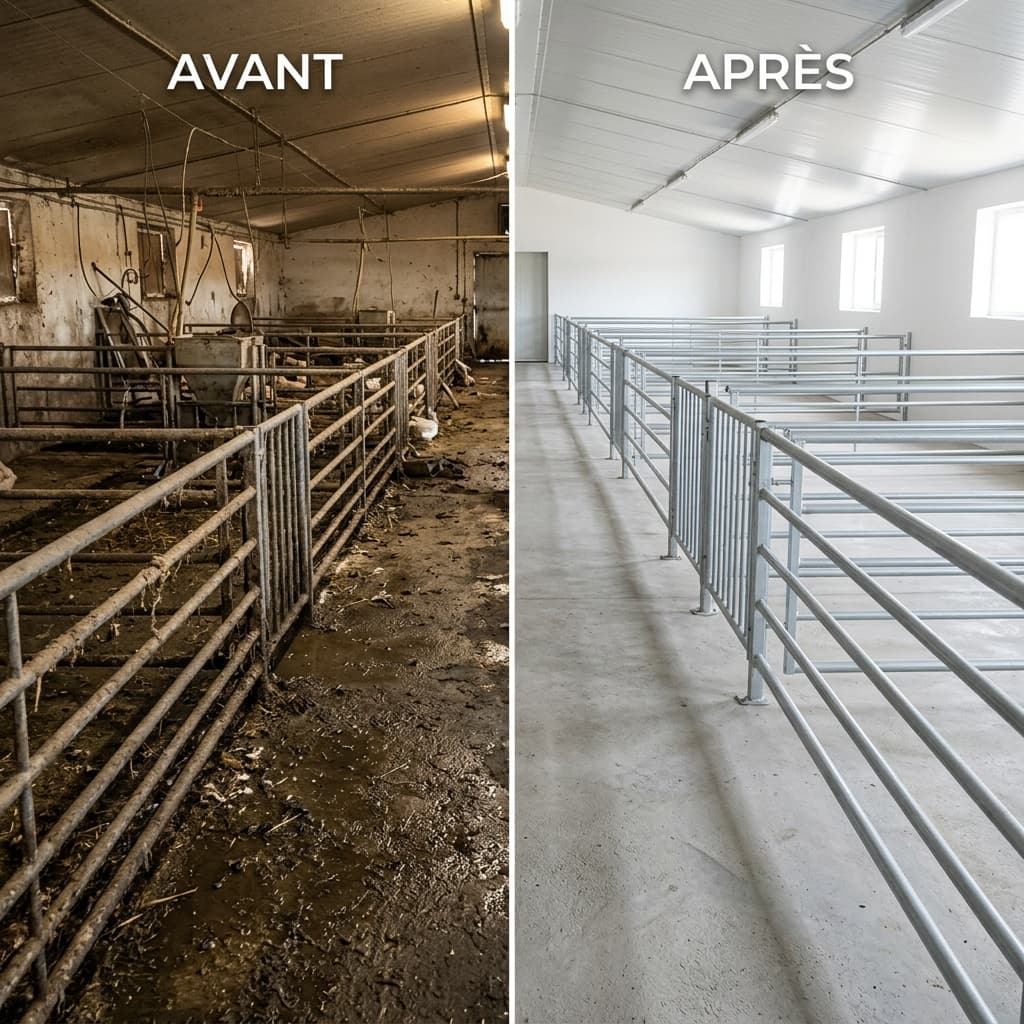
In managing a poultry or pig farm, starting a new cycle is a critical moment. Heating temperature, clean litter, drinking water ready... everything seems in order. Yet, a few weeks later, recurring pathogens appear, feed conversion ratios degrade, and flock heterogeneity increases. Faced with these difficulties, the quality of day-old chicks at delivery or a feed problem along the way is often blamed. In reality, the majority of a flock's sanitary failures are decided long before the animals arrive: they begin in the neglected details of the downtime period (vide sanitaire).
Downtime: much more than a simple waiting period
Downtime is not just a time interval intended to leave the building empty. It is the single opportunity to lower the pathogenic microbial load accumulated during the previous flock to an acceptable safety level. If this phase is shortened, or if the steps are rushed under scheduling pressure, residual contamination remains active. New animals, fragile upon arrival, enter an environment with high invisible infectious pressure.
Critical errors frequently observed during this phase
- Insufficient building drying: disinfecting a building that is still wet dilutes the biocidal product and considerably reduces its efficacy. Additionally, stagnant moisture keeps bacteria and fungal spores alive.
- A shortened cleaning cycle to save time: skipping the preliminary enzymatic action means leaving dry grease and proteins on the walls, which protect pathogenic flora.
- Complete omission of water lines: flushing pipelines with clean water without chemical stripping leaves the biofilm intact inside.
- A rushed restart without verifying disinfection: the absence of validating microbiological controls leaves room for approximation.
Signs of a poorly prepared building at restart
- A smell of fermented litter or persistent ammonia from the moment the building is heated, even before the chicks arrive.
- Litter that dampens and degrades abnormally from the second week.
- A heavy, dusty atmosphere revealing poor ventilation and a high airborne organic load.
- Erratic and unexplained zootechnical performance from cycle to cycle.
The rigorous field protocol recommended by N2K Laboratoires
To turn downtime into a genuine sanitary shield, N2K Laboratoires advises following these steps in strict order:
Step 01 — Pre-wash enzymatic treatment. Applying BIOACTIVE breaks down encrusted organic matter and facilitates its mechanical detachment.
Step 02 — Powerful structural cleaning. Washing with alkaline foam CLORAGRO removes residual grease, litter, and soils across all surfaces.
Step 03 — Final disinfection on dry surfaces. Once the building is dry, applying a certified disinfectant like OPTIMAGRO ensures the destruction of pathogenic flora.
Step 04 — Internal water circuit stripping. Treating pipelines with BIONET eliminates bacterial biofilm fixed inside drinking lines.
Step 05 — Continuous water stabilisation. From placement, continuous disinfection of drinking water with OXYLIS HOCl prevents microbial growth.
Step 06 — Atmospheric control. Fogging or misting with OXYLIS HOCl purifies the atmosphere before animals enter.
Key takeaway
Sanitary success in production is prepared when the building is empty. Every detail neglected during downtime translates into increased microbial pressure on young animals from their very first hours of life. Investing time and chemical rigour in this phase ensures stable and high-performing production cycles.
Recurring contamination problems?
Request a complete audit of your facilities by our biosecurity experts.
Request a Field Audit