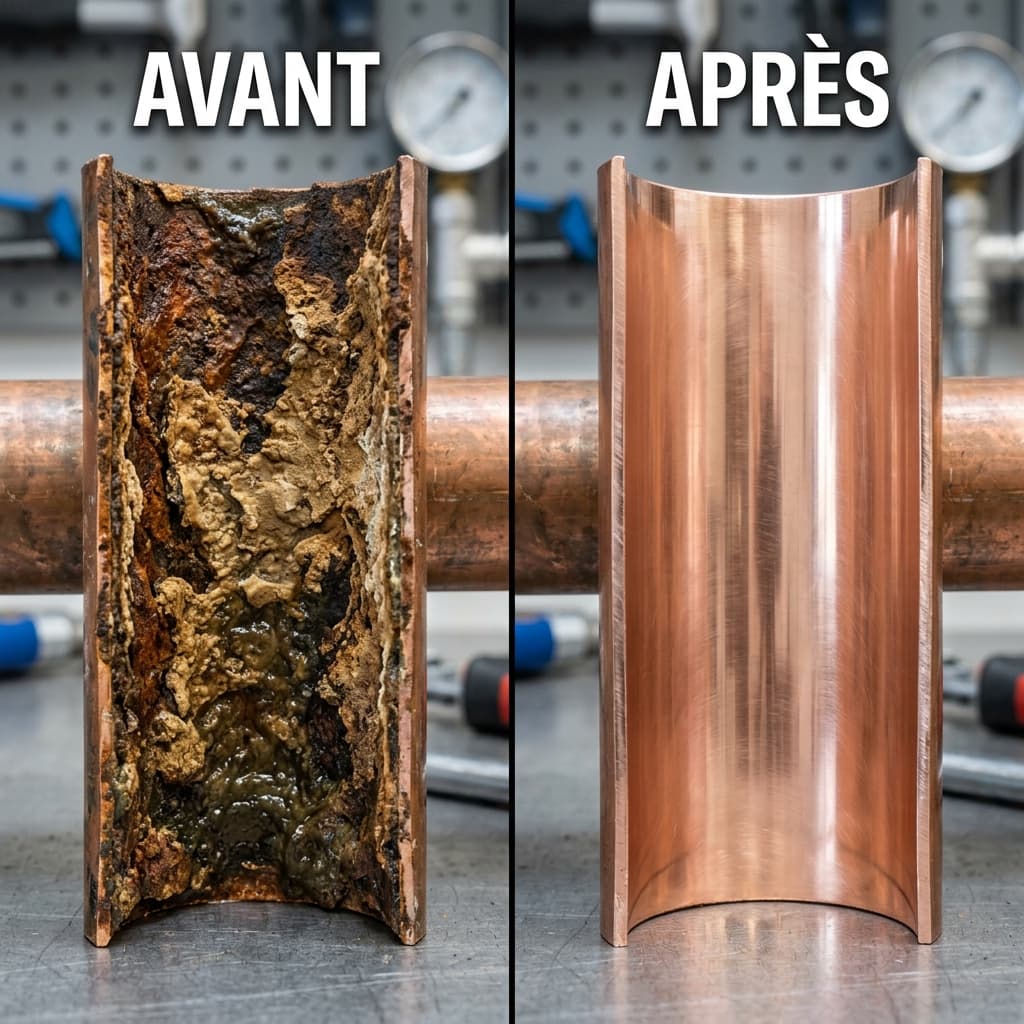
Not all water behaves the same way in drinking circuits. Two farms using similar cleaning protocols can obtain completely opposite results. This phenomenon is explained by the physico-chemical nature of the water used, with certain characteristics promoting the rapid formation of mineral and biological deposits in the pipelines.
Physico-chemical factors accelerating deposits
Several water characteristics directly influence the rate of clogging in circuits:
- High mineralization (hard water): Water loaded with calcium, magnesium, or iron easily precipitates as limescale or rust on the internal walls of pipes.
- Water temperature: Since pipelines often run through heated buildings, the water warms up, which accelerates mineral precipitation and stimulates microbiological activity.
- Stagnation phenomena: During phases of low water consumption (beginning of flocks or during the night), water stagnates in the lines, favoring the deposition of suspended particles.
- Low circulation: Insufficient flow rate prevents the mechanical shear effect necessary to stop micro-deposits from adhering to pipe walls.
Why the mineral problem becomes a biological problem
Mineral deposits (like limescale) are not just mechanical issues that reduce water flow or block nipple drinkers. Limescale creates a rough, porous surface inside the pipeline. This roughness provides an ideal anchoring surface for bacteria, facilitating the formation and attachment of protective biofilm.
Once the biofilm is established on the limescale, conventional disinfectants slide over the surface without being able to eliminate the germs deeply embedded in the mineral matrix.
The recommended protocol
To control this dual mineral and biological risk, periodic stripping must be combined with continuous maintenance:
Regular acid stripping with BIONET. Periodic use of BIONET dissolves scale and iron deposits accumulated inside the lines during sanitary breaks, restoring the pipes to bare metal.
Continuous maintenance and stabilization with OXYLIS HOCl. Continuous injection of OXYLIS HOCl into the drinking water during production prevents bacterial growth and limits the aggregation of organic and mineral deposits.
Key takeaway
Microbiological instability in drinking water often starts with a failure to control mineral deposits. Eliminating the physical support (limescale) is key to preventing biological proliferation (biofilm).
Recurring contamination problems?
Request a complete audit of your facilities by our biosecurity experts.
Request a Field Audit