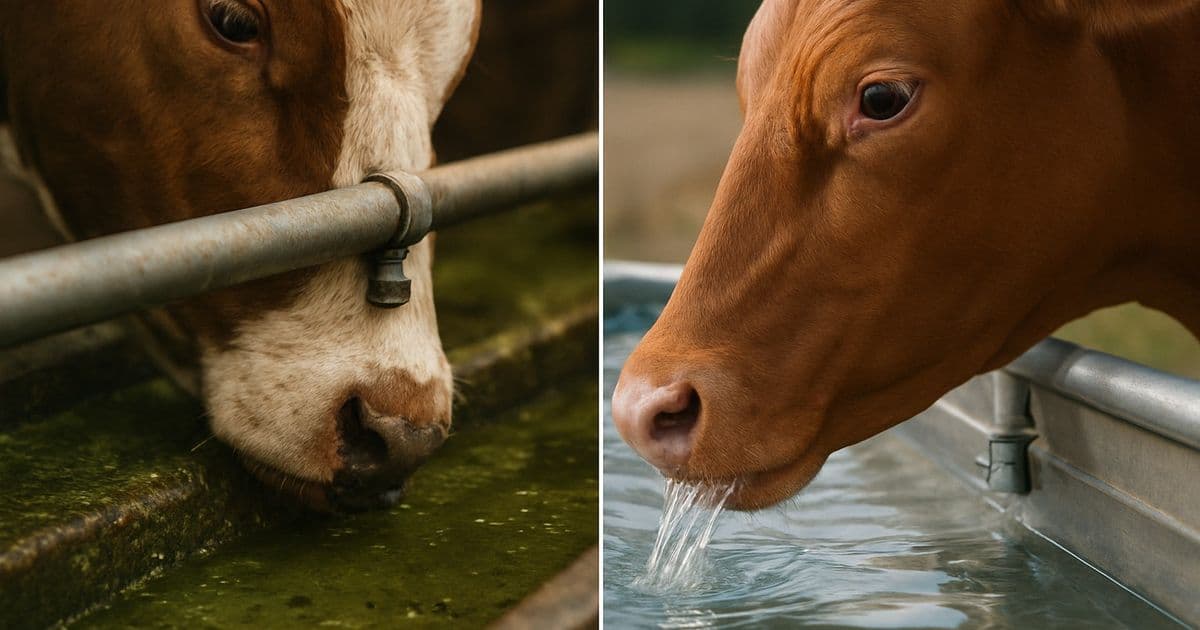
In many breeding facilities, a recurring and concerning phenomenon is observed on Monday mornings or after a period of partial unoccupancy in the building: the water flowing from the pipes emits an abnormal odor, often sulfurous or like "rotten eggs." This rapid deterioration in water quality is the direct symptom of microbiological instability triggered by stagnation.
Stagnation: the awakening of biofilm
The water in a drinking circuit is never completely sterile. During periods of normal consumption, the continuous flow of water exerts a mechanical rinsing action that limits bacterial attachment and biofilm development. Moreover, injected disinfection products have time to act uniformly.
However, over a weekend, a partial sanitary break, or in sparsely occupied buildings, water stagnates for several hours or even days. This downtime radically changes the internal environment of the line:
- Depletion of disinfectant: Residual chlorine or peroxide is quickly consumed upon contact with organic matter. After a few hours of stagnation, the water is no longer protected.
- Water warming: Stagnant water takes on the ambient temperature of the building, creating an ideal incubator.
- Bacterial reorganization: Without a current to disturb them, bacteria in the water clump together, attach to the walls, and massively secrete their biofilm matrix. Anaerobic bacteria proliferate under this layer and release malodorous gases (sulfur).
Clinical signs upon restart
When consumption resumes, the water flow "pushes" these accumulations towards the animals. The signs are unmistakable:
- A strong odor at the purges or the first nipples activated.
- Initially cloudy, yellowish water or water containing viscous particles.
- Sudden clogging of filters or nipples.
- A momentary but significant drop in water consumption by the animals, disturbed by the taste and smell.
The recommended protocol: stripping and maintenance
To avoid these post-stagnation inconveniences, it is essential to treat the cause (the biofilm) and maintain long-lasting protection:
Curative action (without animals present) with BIONET. Regular use of BIONET during sanitary breaks is paramount. Its acidic action deeply strips the lines, removes embedded biofilm, and dissolves scale that serves as a refuge for bacteria.
Continuous preventive action with OXYLIS HOCl. The continuous injection of OXYLIS HOCl guarantees stable disinfection. Unlike other molecules, it retains excellent residual power even during periods of low flow or short stagnation, thus preventing the reformation of biofilm and the appearance of odors.
Key takeaway
Periods of stagnation, even short ones, often favor invisible microbiological imbalances with rapid consequences. A line that smells bad after the weekend is a line that is not structurally clean internally.
Recurring contamination problems?
Request a complete audit of your facilities by our biosecurity experts.
Request a Field Audit