Atmosphere:
Neutralizing the invisible threat in the air
Ammonia corrodes mucous membranes. Airborne pathogens colonize respiratory tracts before any direct contact. Controlling the atmosphere means protecting the flock at the source.
The Problem
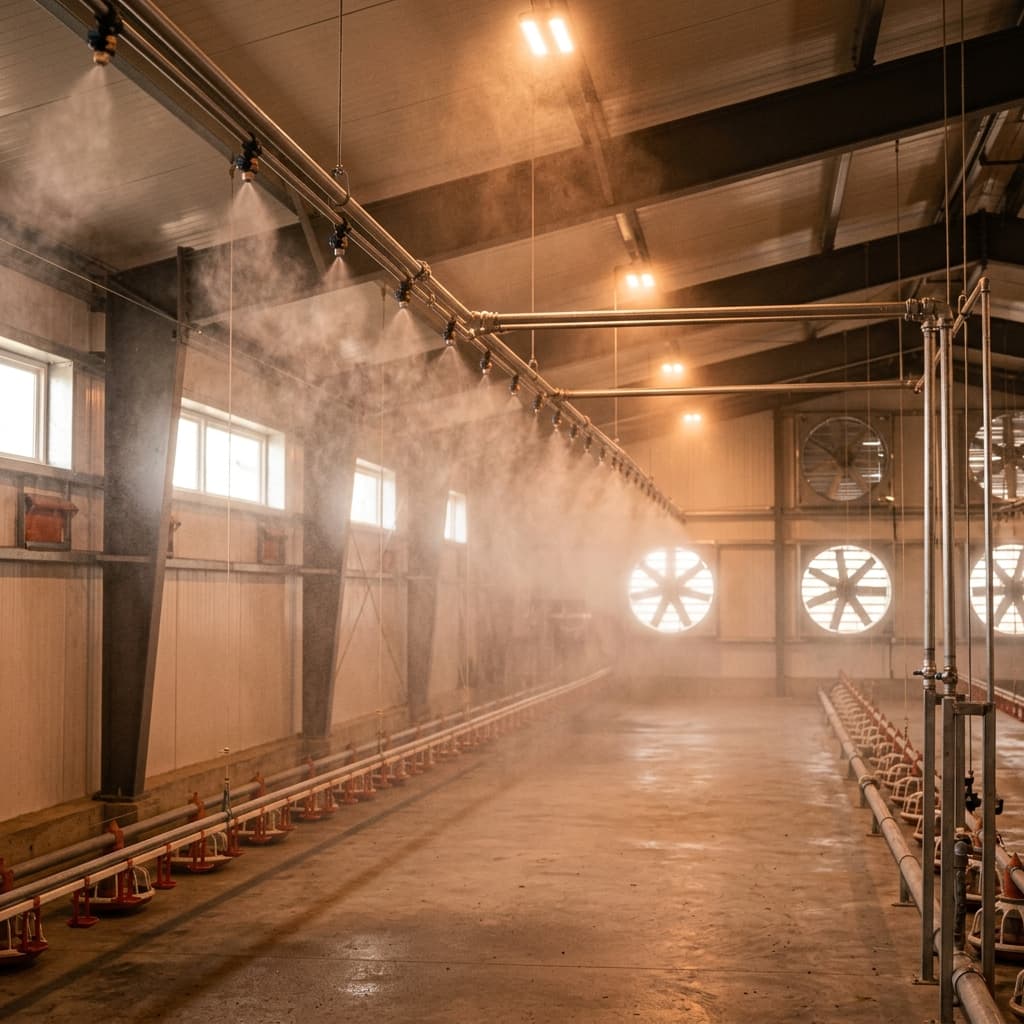
Livestock building air contains three simultaneous threats: ammonia (NH₃) from manure fermentation, fine particles (litter dust, dander, feathers) and airborne microbial load (bacteria, viruses, fungal spores). These three factors act synergistically to degrade flock respiratory health.
Ammonia attacks respiratory mucous membranes from 15 ppm. Above 25 ppm — a critical threshold documented by multiple scientific studies — ciliated cells of the bronchial epithelium are destroyed. The animal loses its first line of immune defense. Airborne pathogens (Mycoplasma, infectious bronchitis virus, Newcastle) then penetrate without resistance.
The economic consequences are direct: FCR degradation, decreased average daily gain (ADG), increased condemnations at slaughter for respiratory lesions, intercurrent mortality. A degraded atmosphere costs more than preventive treatment.
In Tunisia, conditions worsen the situation: insufficient ventilation in many buildings, wet litter in cold season, high stocking densities. Atmosphere control is often the most neglected link in the sanitary protocol.
Our Protocol
OXYLIS HOCl
Nebulization Solution in Animal Presence
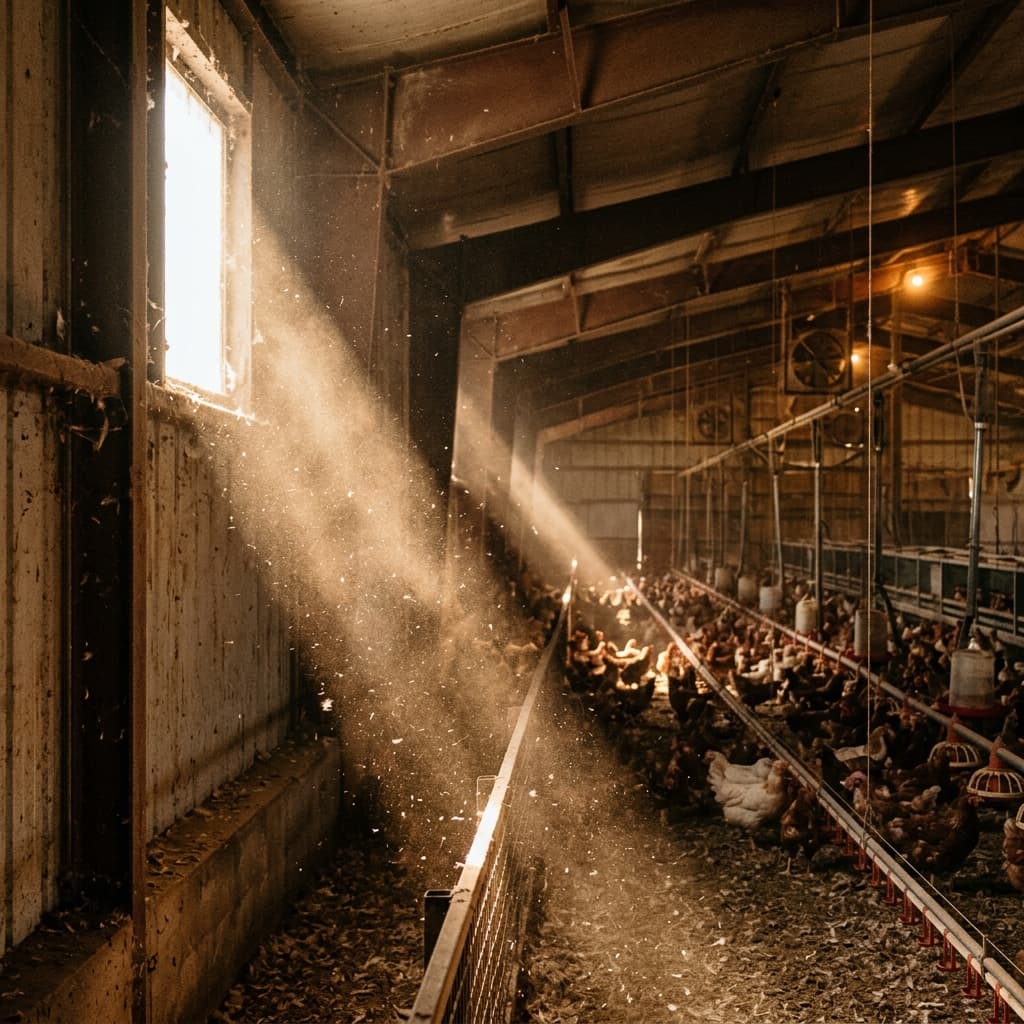
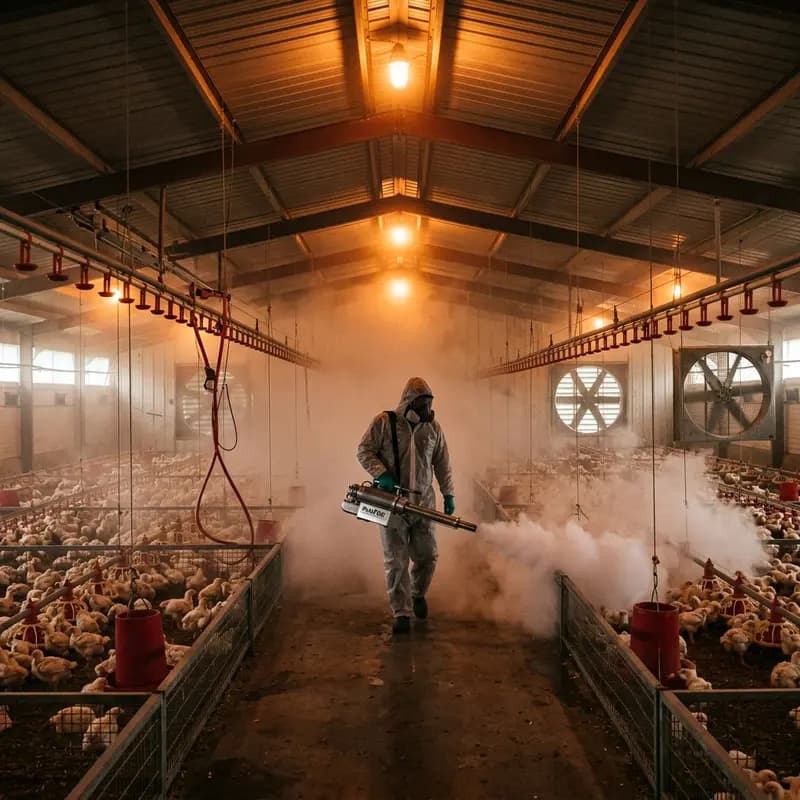
OXYLIS HOCl is a nebulizable solution with airborne biocidal spectrum. Fine suspended particles neutralize pathogens before they reach animal respiratory mucous membranes. Can be used in the presence of livestock without stress or irritation.
- Use in animal presence — no stress, no irritation
- Ammonia (NH₃) reduction: up to -60% in 30 minutes
- Airborne pathogen neutralization (bacteria, viruses, spores)
- Recommended nebulizer: high pressure, droplets <50 μm
- Preventive frequency: 1 to 2 times/day — curative: 3 to 4 times/day
BIOACTIVE
Enzymatic Surface Cleaner
BIOACTIVE is a concentrated enzymatic cocktail (proteases, lipases, amylases) that degrades organic matter on surfaces and equipment without friction or chemical vapor. It prepares the environment for OXYLIS HOCl nebulization by reducing emission sources.
- Triple enzymatic cocktail: proteases, lipases, amylases
- Enzymatic degradation without friction or chemical vapor
- Surface preparation before OXYLIS HOCl nebulization
- Biodegradable — no toxic residue
- Foam or spray application on heavily soiled surfaces
Atmosphere Control Parameters
| Parameter | Critical threshold | Optimal threshold | N2K Action |
|---|---|---|---|
| NH₃ (Ammonia) | >25 ppm | <10 ppm | OXYLIS HOCl nebulization |
| CO₂ | >3,000 ppm | <2,000 ppm | Ventilation + OXYLIS HOCl |
| Relative humidity | >75% | 55-65% | BIOACTIVE litter |
| Airborne bacterial load | >10⁵ CFU/m³ | <10³ CFU/m³ | OXYLIS HOCl preventive |
Nebulization Equipment Guide
Static nebulizer
Ceiling-mounted. Covers 200-300 m². Ideal for automated treatments.
Mobile nebulizer
Cart-mounted. Flexible, suited for variable-size buildings.
High pressure
Droplets <50 μm. Better air suspension. Recommended by N2K.
Ultrasonic
Very fine droplets. More expensive but excellent volumetric coverage.
Field Results
-60%
NH₃ reduction in 30 minutes after OXYLIS HOCl nebulization
>95%
Airborne microbial load reduction
0 cases
Of documented animal stress during OXYLIS HOCl use
Technical FAQ
Do not nebulize OXYLIS HOCl during the 48 hours following a spray or aerosol vaccination. The product could interfere with live attenuated vaccine strains. Resume preventive treatment 48h after vaccination.
For a 1500 m² building, plan 5 to 6 static high-pressure nebulizers evenly distributed, or 2 passes with a mobile high-pressure nebulizer. Prefer droplets <50 μm for optimal suspension.
Yes. BIOACTIVE is applied to surfaces (floors, equipment) and OXYLIS HOCl is nebulized in the air. The two products are complementary: BIOACTIVE reduces the source of organic emissions, OXYLIS HOCl treats pathogens already in suspension.
During high heat periods (>35°C), increase frequency to 3-4 nebulizations per day. Heat accelerates bacterial proliferation and increases ammonia concentrations. Maintain maximum ventilation in parallel.
No. At recommended doses (1 mL/m³), OXYLIS HOCl leaves no detectable residues on livestock products. The product acts in gas phase and degrades rapidly. It is designed for use in the presence of production animals.