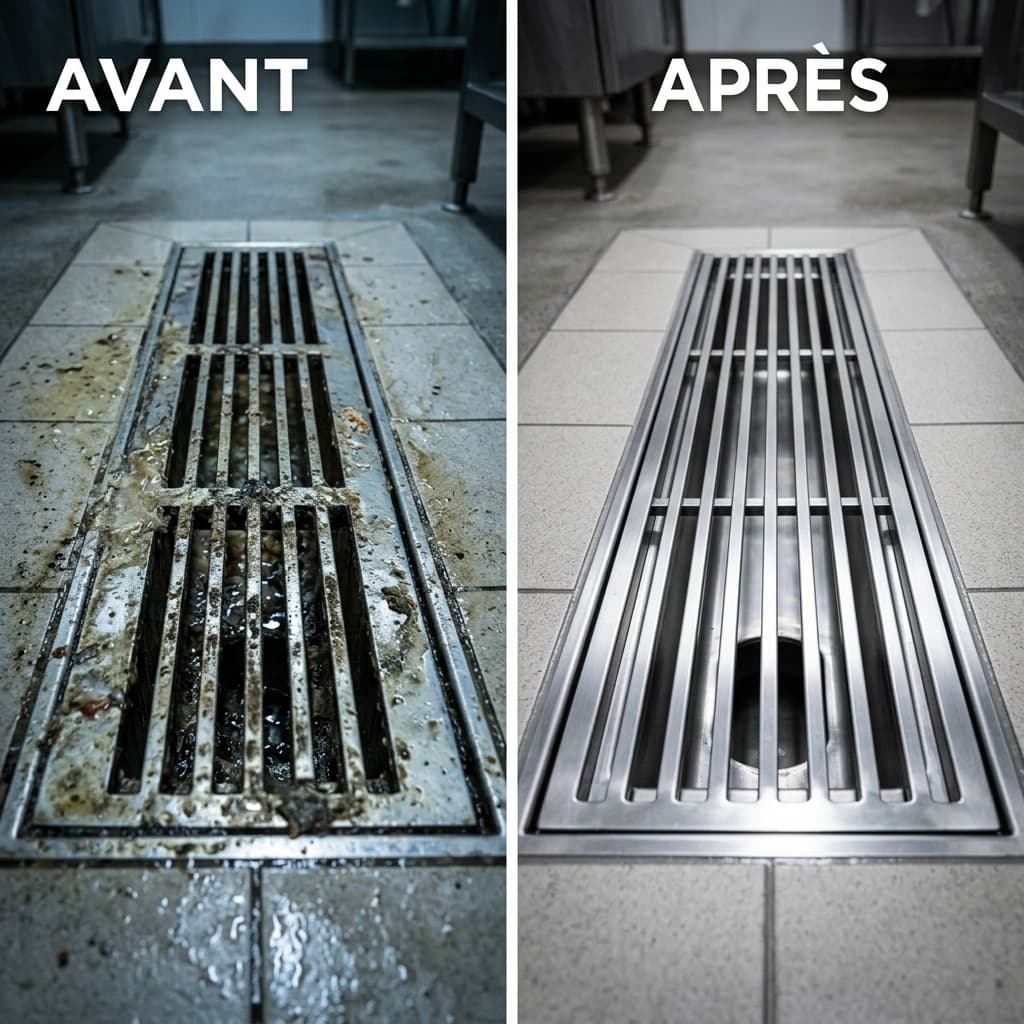
In the food industry, recurring non-compliances during HACCP (Hazard Analysis Critical Control Point) audits are a major source of stress and additional costs. Whether it is the repeated detection of Listeria monocytogenes in the environment, high bacterial loads on surfaces after disinfection, or contaminated standing water, these findings often return from one audit to the next. The usual response is to increase staff training or step up controls. Yet, repetitive non-compliances do not reflect a lack of effort: they reveal a fundamentally incomplete sanitary protocol.
Invisible methodological errors undermining your audits
The rigorous application of a flawed hygiene plan consistently produces poor results. The most common protocol failures observed in processing plants are:
- Disinfection on dirty surfaces: the absence of deep degreasing leaves an organic film that chemically inactivates disinfectants (such as quaternary ammoniums or chlorine).
- Mixing or shortening steps: due to time pressure, chemical contact times and intermediate rinsing phases are reduced, preventing molecules from acting.
- Neglecting internal circuits: process water piping, recirculation loops, and the internals of washing machines are excluded from daily protocols, becoming biofilm breeding grounds.
- Insufficient final rinsing: leaving chemical residues that paradoxically protect bacterial niches.
Critical zones systematically overlooked by teams
Auditors prioritize areas where the risks of cross-contamination are highest, which are often neglected during quick cleaning cycles:
- Evaporators and cold rooms: cold temperatures slow down bacterial growth but do not stop it; constant humidity promotes Listeria installation there.
- Drainage systems and floor gullies: genuine reservoirs of pathogens that aerosolize into the air when high-pressure water jets are used.
- Gaskets and door hinges: whose microscopic porosity shelters micro-organisms unreachable without mechanical action.
- Undersides of conveyors and modular articulated belts.
Severe consequences for food businesses
Repeating HACCP non-compliance files presents major risks:
- Loss of international certifications (IFS, BRC, FSSC 22000) blocking access to retail markets.
- Temporary or permanent suspension of export approvals.
- Regulatory warnings from veterinary control authorities.
- High operational costs linked to emergency corrective cleaning and raw material losses.
The sanitary excellence protocol recommended by N2K Laboratoires
To permanently eliminate repetitive non-compliances, the entire production ecosystem must be stabilized:
Step 01 — Industrial surface stripping. Consistent use of CLORAGRO ensures complete elimination of fats and biofilms on open structures (stainless steel, floors, walls).
Step 02 — Validated disinfection. Applying a broad-spectrum biocide like OPTIMAGRO on clean surfaces guarantees a microbial reduction that meets regulatory requirements.
Step 03 — Closed process circuit treatment. Regular cleaning-in-place (CIP) with BIONET eliminates invisible internal deposits.
Step 04 — Microbiological water stabilisation. Dosing water with a suitable treatment like OXYLIS HOCl guarantees the microbiological safety of wash and process water.
Key takeaway
An adverse HACCP audit is never an isolated issue. It is the mirror of a sanitary protocol that treats visible surfaces but ignores biological niches. Moving from a visual cleaning logic to a methodical decontamination of retention areas is the only key to securing long-term audit success.
Recurring contamination problems?
Request a complete audit of your facilities by our biosecurity experts.
Request a Field Audit