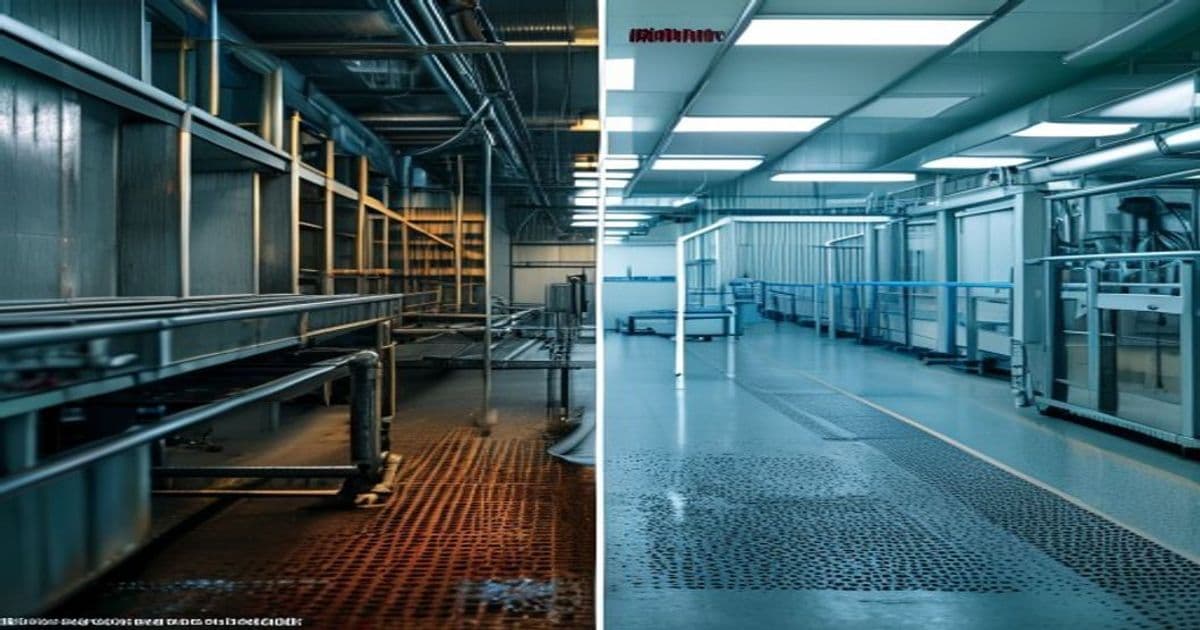
For a quality manager or a food plant director, it is an extremely frustrating situation: the cleaning crews have just spent hours scrubbing, foaming, and disinfecting the production lines. Visually, the stainless steel shines. Yet, surface swabs or microbiological analyses of the next morning's first products reveal high levels of Listeria, Pseudomonas, or Enterobacteriaceae. This immediate return of contamination is not due to a lack of effort by the crews, but to the presence of an intact biofilm that releases its bacteria as soon as the machines start.
The difference between visual cleanliness and microbiological cleanliness
Traditional washing protocols (hot water, classic detergents, mechanical action) are designed to remove visible macroscopic soil (meat pieces, thick grease, dust). However, bacteria do not live in isolation on conveyor stainless steel or plastic. They organise into biofilms, genuine biological shields stuck to surfaces:
- Biofilm is invisible to the naked eye: A surface can shine and look clean while coated with a sticky matrix sheltering millions of bacteria.
- Resistance to classic detergents: The biofilm matrix (made of sugars and proteins) resists classic cleaning agents, which glide over its hydrophobic surface.
- Disinfectant inactivation: During the disinfection step, the biocide destroys the outer layer of the biofilm but is depleted before reaching the bacteria lodged underneath.
Why contamination restarts instantly
As soon as production resumes, motor vibrations, food passage, and physical friction break the outer layer of the poorly removed biofilm. The deep bacteria, remaining viable and protected from biocides, are released in mass and attach to food products being processed. This explains the positive analysis results on lines cleaned just hours before.
The biofilm eradication protocol recommended by N2K Laboratoires
To obtain durably negative analyses, replace superficial classic washing with a biological dismantling protocol:
Step 01 — Stripping treatment with CLORAGRO. Periodic application of CLORAGRO specifically removes the protein and lipid deposits forming the cement of the biofilm. Deprived of their protective shield, bacteria are exposed.
Step 02 — Chlorinated alkaline stripping with CLORAGRO. Using CLORAGRO as a foam emulsifies hydrolysed fats and removes the unstructured matrix from the surface.
Step 03 — Final shock disinfection with OPTIMAGRO. Applying OPTIMAGRO on a bare surface guarantees total elimination of bacteria, with no organic obstacles to hinder its biocidal action.
Key takeaway
Positive analyses after cleaning indicate the presence of a mature biofilm. Classic disinfectants cannot cross this protective layer. Only enzymatic degradation of the organic matrix releases and destroys the hidden bacteria to durably stabilise your quality indicators.
Recurring contamination problems?
Request a complete audit of your facilities by our biosecurity experts.
Request a Field Audit