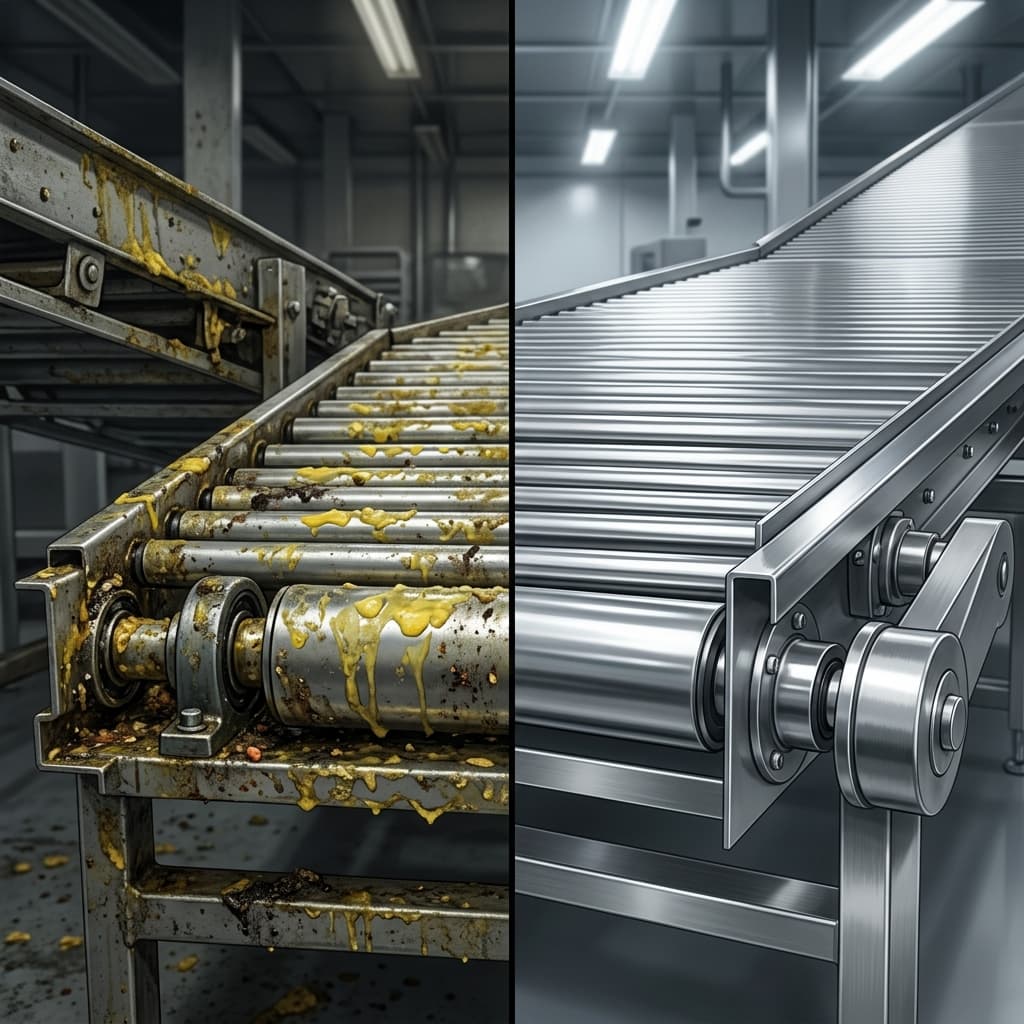
In cutting, processing rooms, and slaughterhouses, the belt conveyor is the central equipment. It ensures the continuous transport of carcasses, meat pieces, and finished products from one station to another. However, this physical centrality also makes it the primary vector of bacterial transfer. Conveyors frequently become real highways for cross-contamination, spreading Listeria, Salmonella, or Pseudomonas across the entire production line.
Why do conveyors accumulate so many contaminants?
The conveyor is a complex mechanical device with numerous retention zones inaccessible to classic high-pressure washes:
- Continuous friction: The repeated passage of fatty food deposits a micro-fine organic film on the belt (whether made of PVC, polyurethane, or plastic modular links).
- The underside of the belt: During daily cleaning operations, the belt is rarely flipped or detensioned. Organic juices flow by capillary action under the belt, creating a permanent damp stagnation zone.
- Rollers, drums, and rotation axes: These permanently moving parts accumulate meat debris and grease that undergo moderate mechanical heating, perfect for bacterial multiplication.
- Friction and micro-cracks: Physical wear of the belt creates micro-scratches where bacteria settle to form biofilms indestructible by simple brushing.
Continuous cross-contamination
As soon as the conveyor is restarted, mechanical vibrations and direct frictional contact with healthy food detach biofilm fragments. A batch of healthy meat passing over a belt contaminated minutes earlier instantly picks up the deposited bacterial flora, contaminating the final product before packaging.
The technical cleaning protocol recommended by N2K Laboratoires
To permanently eliminate this bacterial highway, belts must be detensioned and underlying biofilms removed through a structured protocol:
Step 01 — Degreasing pretreatment with CLORAGRO. Spray CLORAGRO over the entire conveyor, focusing on the belt's underside and rollers. Its active formula emulsifies animal fat deposits and eliminates proteins stuck in plastic scratches.
Step 02 — Precision alkaline stripping with CLORAGRO. Applying CLORAGRO as a foam emulsifies liquefied organic matters and removes unstructured biofilm traces during rinsing.
Step 03 — Validated final disinfection with OPTIMAGRO. Applying OPTIMAGRO on the clean belt eliminates the last bacterial populations, leaving secured equipment for the next day's production.
Key takeaway
Cleaning only the upper surface of a conveyor is insufficient. The belt's underside and return drums must receive rigorous attention. Using enzymatic chemistry detaches fats in inaccessible micro-cracks to halt cross-contamination.
Recurring contamination problems?
Request a complete audit of your facilities by our biosecurity experts.
Request a Field Audit