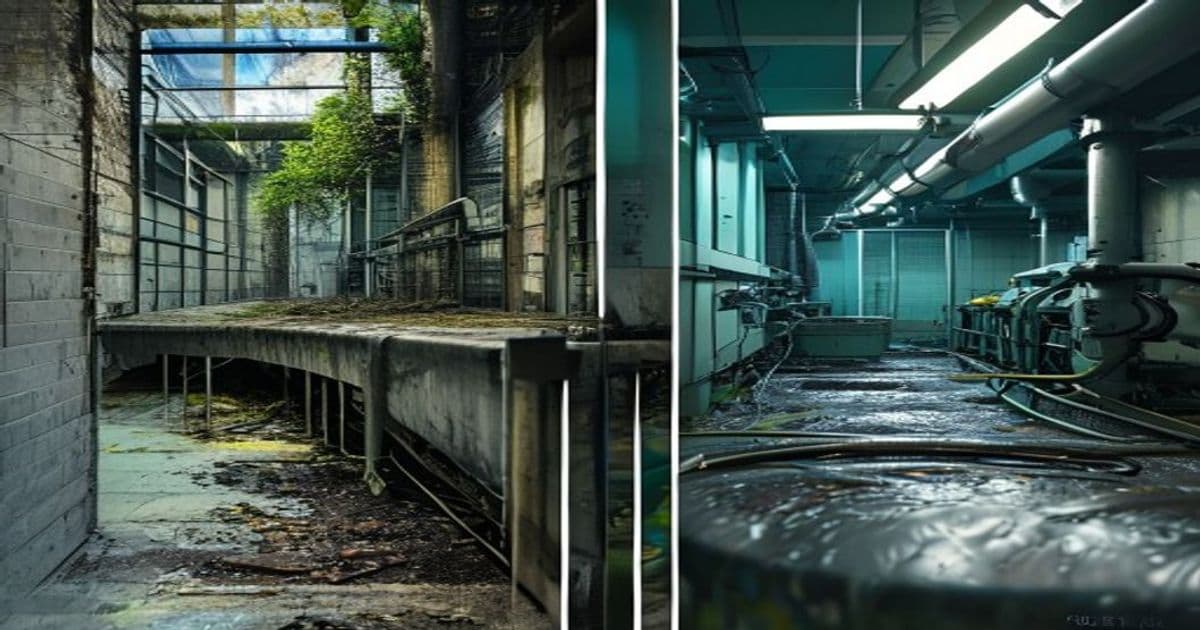
In food industries and slaughterhouses, the battle against Listeria monocytogenes and other environmental pathogens is constant. While colossal resources are allocated to cleaning food contact lines, a critical element is too often neglected: floor siphons, gullies, and drainage pipes. Drains are the densest biological reservoirs in a plant. Without appropriate enzymatic and chemical treatment, they become active sources of recontamination for the entire building.
Why drains constitute an ideal microbiological ecosystem
Floor drains receive everything washed or discarded during the industrial process:
- Continuous accumulation of nutrients: pieces of meat, blood, fats, vegetable juices, or dairy products flow there continuously.
- Permanent moisture: essential for bacterial survival and proliferation.
- Mechanical protection: located below floor level, protected by grates, drains escape direct mechanical brushing during regular washdowns.
- Water stagnation: promoting smelly anaerobic fermentations.
The dynamics of recontamination: from floor to product
One might think that what lies in the drain has no contact with food. This is a fluid dynamics error. When an operator directs a high-pressure water jet towards a poorly cleaned drain grate or gully:
- The water jet pulverises the drain's internal biofilm, generating microbial aerosols (fine droplets suspended in the air).
- These invisible aerosols, laden with Listeria or Pseudomonas, rise and settle on nearby conveyors, cutting tables, and clean equipment.
- Additionally, changes in atmospheric pressure or strong ventilation drafts pull contaminated air back from sewers into the workspace atmosphere.
Why drain treatment generally fails
Simply pouring chlorine or caustic soda down a drain grate is a false solution. Fats form a hydrophobic plug impermeable to classic products. Biocides pass over without touching the biofilm embedded under the grate and on the vertical walls of the siphon. Moreover, aggressive disinfectants corrode cast iron pipes or degrade stainless steel joint adhesives.
The drain treatment protocol recommended by N2K Laboratoires
To neutralise the biological reservoir of drains, N2K Laboratoires proposes a protocol of enzymatic liquefaction followed by deep sanitation:
Step 01 — Disinfection and treatment with OXYLIS HOCl. The initial treatment with OXYLIS HOCl destroys the structure of biofilms and eliminates organic deposits in siphons and pipe walls.
Step 02 — Chlorinated alkaline cleaning with CLORAGRO. Injecting active foam CLORAGRO allows it to adhere to the gully's vertical walls to dislodge unstructured greasy deposits.
Step 03 — Safety disinfection with OPTIMAGRO. Applying OPTIMAGRO ensures final disinfection, leaving a clean substrate that prevents the installation of pathogenic flora.
Key takeaway
A poorly managed drain is a sanitary time bomb. Cleanliness of floors and drains is the guarantor of production line safety. Breaking down proteins and lipids enzymatically is the only scientific method to keep siphons healthy and safe.
Recurring contamination problems?
Request a complete audit of your facilities by our biosecurity experts.
Request a Field Audit