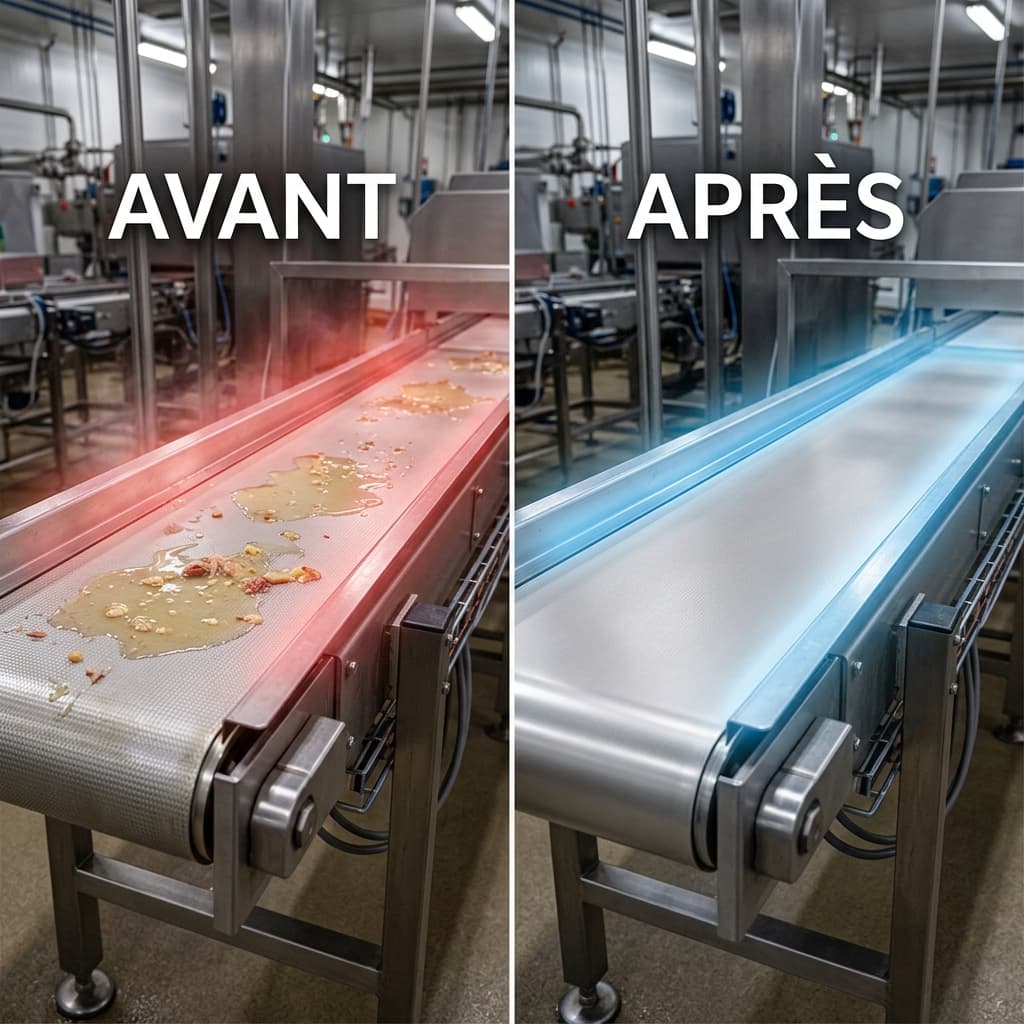
In many food processing plants, short production line stops are commonplace. Whether it is for quick maintenance, a format or batch change, or a simple machine adjustment, these pauses lasting from a few minutes to a few tens of minutes are often considered neutral from a sanitary point of view. However, these micro-stops are frequently critical periods that silently increase the risks of recontamination.
What really happens during a micro-stop
When a production line stops, the environmental dynamics of the workshop change instantly, creating favorable conditions for bacterial development:
- Stagnation of moisture: Water and residual liquids, usually evacuated by the movement of products or conveyors, accumulate and stagnate on surfaces.
- Prolonged residue activity: Organic debris (proteins, fats, sugars) remains in static contact with equipment and begins to degrade.
- Local temperature increase: Without the continuous air flow generated by moving machines or associated ventilation, the heat released by motors stagnates, locally warming the contact surfaces.
An underestimated bacterial proliferation
In this warm, humid, and nutrient-rich environment, bacteria waste no time. They take advantage of this moment of calm to initiate the formation of micro-colonies and begin secreting the protective matrix of the biofilm. This process is much faster than often imagined.
Consequently, when the line restarts, the microbial load on the contact surfaces is significantly higher than at the time of the stop. The first batches of products passing down the line then risk absorbing this microbial load, leading to non-conformities that are difficult to explain during quality controls.
The recommended protocol: intermediate securing
To prevent these short stops from turning into sanitary breaches, it is essential to secure critical contact points:
Targeted intervention with ALCOSEPT PRO. During the stop, a quick intermediate spray of ALCOSEPT PRO on high-risk contact areas (belts, slicers, guides) instantly blocks bacterial activity. Its fast-evaporating, no-rinse formulation sanitizes the surface without prolonging downtime, guaranteeing a safe resumption of production.
Key takeaway
A production stop, however short, is never a break for microorganisms. Total sanitary control requires integrating quick intermediate disinfections during micro-stops to prevent contamination of restart batches.
Recurring contamination problems?
Request a complete audit of your facilities by our biosecurity experts.
Request a Field Audit