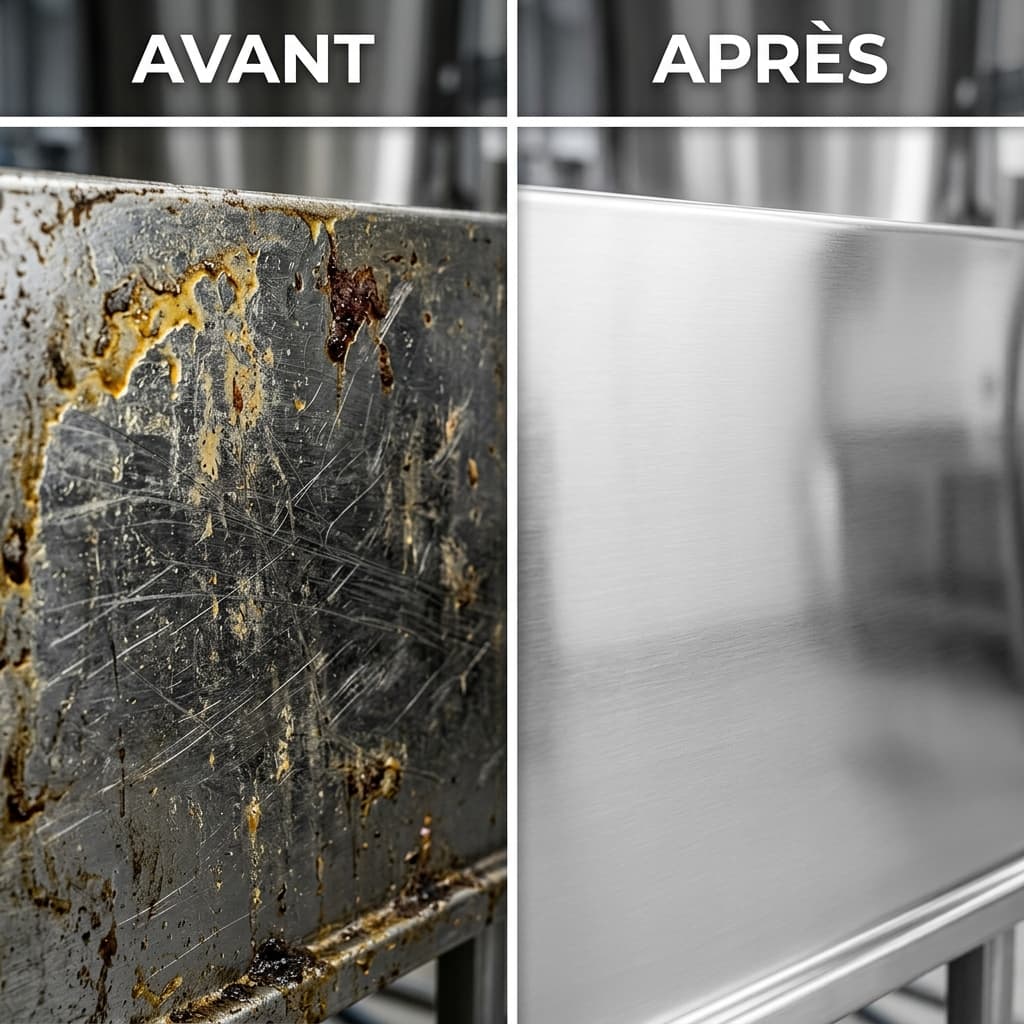
In many food industries, stainless steel (inox) surfaces are preferred for their reputation of durability and ease of maintenance. However, after several years of service, certain areas become much more difficult to clean and control from a sanitary perspective. This change in stainless steel behavior is not inevitable, but the consequence of microscopic surface wear.
Factors that degrade stainless steel over the years
Over time and repeated cleaning cycles, several factors alter the surface structure of stainless steel:
- Micro-scratches: The use of abrasive tools, overly harsh brushes, or repeated mechanical friction creates micro-scratches that are invisible to the naked eye but large enough to shelter bacteria.
- Embedded residues: If cleaning is not perfect, microscopic organic films accumulate in surface irregularities and eventually become deeply embedded.
- Repeated moisture: Permanent exposure to water, especially hard water, promotes the precipitation of mineral deposits that modify surface roughness.
- Poorly rinsed products: Residues of unrinsed detergents or disinfectants can react chemically with stainless steel over the long term, altering its protective passivation layer.
Why this becomes critical for food safety
As soon as the smooth surface of stainless steel is compromised, the adhesion of organic materials and biological contaminations (such as biofilm) is greatly facilitated. Bacteria find physical shelter in micro-scratches against the mechanical action of washing and the chemical action of conventional disinfectants.
This results in irregular environmental analyses (ATP testing, surface swabs) and increasingly long cleaning times to achieve the same result.
The recommended protocol
To restore and control aging stainless steel surfaces, a rigorous cleaning protocol is required:
Step 01 — Elimination of organic accumulations with BIOACTIVE. Applying BIOACTIVE digests and loosens organic residues embedded in surface micro-defects.
Step 02 — Stripping and passivation with CLORAGRO. Using CLORAGRO removes remaining adherent films and prepares the surface for disinfection by eliminating any protective barrier.
Step 03 — Final disinfection with OPTIMAGRO. Applying OPTIMAGRO ensures the final destruction of micro-organisms on a perfectly cleaned and exposed stainless steel surface.
Key takeaway
An old stainless steel surface can turn into a genuine reservoir of invisible contamination. Adapting protocols with appropriate enzymatic and stripping phases is essential to compensate for the microscopic wear of equipment.
Recurring contamination problems?
Request a complete audit of your facilities by our biosecurity experts.
Request a Field Audit